
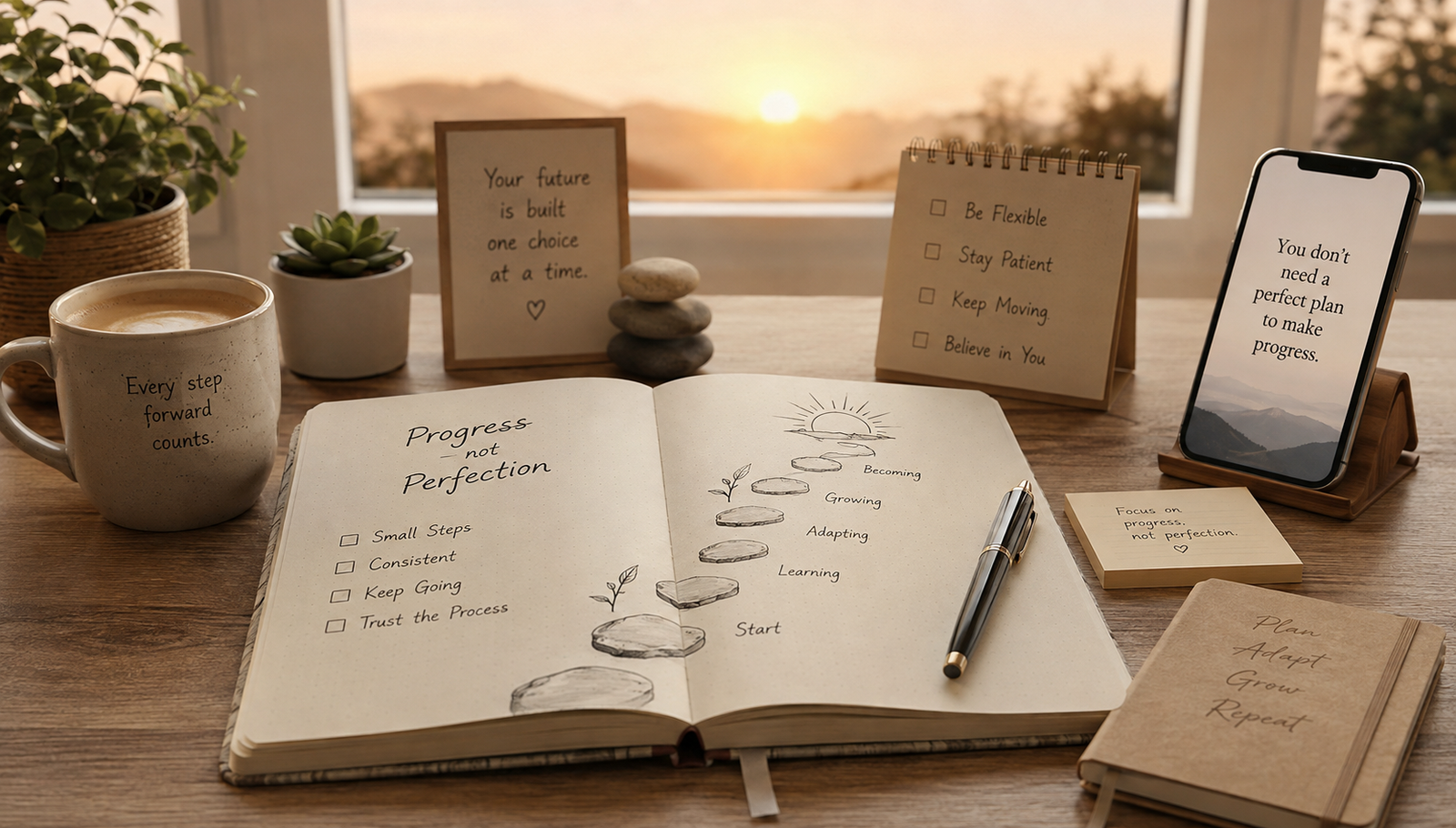
There is a strange pressure to know exactly where life is going. We are often encouraged to choose the right career, set ambitious goals, make perfect decisions, and somehow have everything figured out early. Social media can make this pressure even stronger. We see people celebrating promotions, new businesses, achievements, relationships, and major life changes, while our own journey may feel much slower.
But real life rarely moves in a straight line.
You may start with one dream and discover that your interests have changed. You may work hard toward a goal and realize that it is no longer what you want. Sometimes an unexpected opportunity takes you somewhere you never planned to go. None of these things automatically mean that you have failed.
Sometimes, changing direction is part of growing.
A useful reminder is: “You do not need to see the entire staircase to take the next step.”
The point is simple. You do not need a perfect map before moving forward. You need enough clarity to take the next meaningful step.
If you are looking for a simple way to turn meaningful words into daily inspiration, QuoteStudio lets you create and share beautiful quote images that can keep your favorite reminders close throughout your journey.
Progress Can Be More Valuable Than Perfection
Perfection sounds attractive, but it can quietly become a reason to delay action. Someone may wait until they have more confidence before applying for a job. Another person may wait until they have the perfect plan before starting a project. A student may keep preparing instead of beginning. A writer may refuse to publish because the first version does not feel good enough.
Progress works differently.
Progress asks, “What can I improve today?” rather than “How can I get everything right immediately?”
That small change in thinking can make goals feel much more manageable. Instead of judging yourself by the distance still left, you begin noticing the distance you have already covered.
Maybe you read ten pages instead of zero. Maybe you practiced a new skill for twenty minutes. Maybe you finally sent an important email. Maybe you had a difficult conversation you had been avoiding.
These moments may look small from the outside, but they are often how meaningful change begins.
Quotes Can Help You Notice the Next Step
One reason people enjoy quotes is that a few carefully chosen words can interrupt a negative thought pattern. When you are overwhelmed, a long explanation may not stay with you. A short sentence can sometimes do something different: it gives your mind a new direction.
Consider this original reminder:
It does not promise instant success. It simply brings your attention back to action.
That is where quotes can become more useful than decoration. Instead of collecting dozens of motivational lines and forgetting them five minutes later, choose one that connects with something you are actually experiencing.
For example, if you are afraid of starting, keep a quote about courage nearby. If you are frustrated by slow results, choose words about patience. If you are comparing yourself with others, use a reminder about your own journey.
You can also explore QuoteStudio's guide on how quotes can inspire success through mindset, focus, and daily action for another perspective on turning encouraging words into practical habits.
Stop Measuring Your Journey Against Someone Else's Timeline
Comparison can make perfectly healthy progress feel like failure.
Imagine two people learning the same skill. One becomes confident within six months. The other needs two years because they have different responsibilities, opportunities, learning styles, or starting points. It would make little sense to call the second person unsuccessful simply because their timeline is different.
Yet we often do exactly that to ourselves.
Someone else's promotion does not make your career less valuable. Someone else's business launch does not make your idea worthless. Someone else's achievements do not erase the work you have already done.
Your timeline belongs to you.
This does not mean that goals are unimportant. Goals give direction and help us decide where to place our energy. But a goal should guide you, not become a weapon you use against yourself.
When your goal becomes a constant source of self-criticism, it may be time to reconsider how you are measuring progress.
Make Your Goals Flexible Enough for Real Life
A good goal should give you direction without making you feel trapped.
For example, instead of saying, “I must completely change my career this year,” you could create smaller milestones:
- Research three possible career paths.
- Identify the skills each path requires.
- Spend a few hours each week learning one useful skill.
- Speak with someone who already works in the field.
- Review your progress at the end of each month.
Breaking a large ambition into smaller actions makes the journey easier to understand. Career-development guidance similarly recommends identifying a larger objective and then working through smaller, manageable steps toward it.
The important part is leaving room for adjustment. You may discover that one option is not right for you. That is useful information, not wasted time.
You can also read QuoteStudio's article about small daily habits for ideas on how consistent actions can gradually influence different areas of life.
Progress can feel especially meaningful when you are working toward something that genuinely matters to you. Psychology Today's article on goal progress and happiness explores why moving forward on meaningful goals can influence how satisfied we feel.
Five Simple Ways to Focus on Progress
1. Compare Yourself With Your Past Self
Instead of asking whether you are ahead of everyone else, ask whether you understand something today that you did not understand six months ago. Personal progress is easier to recognize when you use your own past as the reference point.
2. Keep Your Next Step Small
When a goal feels enormous, shrink the action. You do not need to finish the entire project today. Decide what one useful action can be completed before the day ends.
3. Record Small Wins
Keep a simple note on your phone or in a journal. Write down things you completed, skills you practiced, difficult situations you handled, and lessons you learned. On difficult days, this record can remind you that your journey has not been standing still.
4. Allow Yourself to Change Direction
Changing your mind after learning something new is not weakness. Sometimes your original plan was based on information you no longer have. Growth gives you new information, and new information can change your choices.
5. Use Quotes as Reminders, Not Rules
A quote should encourage reflection rather than dictate how you must live. Read it, think about why it matters, and then decide how it applies to your own situation.
What to Do When Progress Feels Too Slow
Slow progress can be frustrating because effort and results do not always appear at the same time.
You might study for weeks before feeling confident. You may work consistently without immediately receiving recognition. You may try to improve a relationship and see very little change at first. You may build a new habit only to lose momentum after a difficult week.
These moments can create the feeling that nothing is working.
Before giving up, look for quieter signs of change.
Are you making fewer mistakes? Do you recover faster after setbacks? Do you understand your priorities better?
Growth is not always dramatic. Sometimes it looks like becoming slightly calmer, wiser, more prepared, or more consistent than you were before.
One original reminder worth keeping is:
“Not every improvement makes noise; some growth happens quietly.”
Progress Does Not Mean You Must Always Be Productive
There is another important side to progress: rest.
Modern productivity culture can make people feel guilty whenever they are not working toward something. But a healthy life cannot be measured only by completed tasks.
Rest can help you return with a clearer mind. Time with family can strengthen relationships. Enjoying a hobby can remind you that life is more than achievement.
Progress should support a meaningful life, not consume it.
If you are interested in building healthier routines, QuoteStudio's article on using daily quotes to improve mindset offers another simple way to bring positive reflection into ordinary days.
Turn One Quote Into One Action
Here is a simple exercise you can try.
Choose one quote that genuinely speaks to you. Write it at the top of a page. Underneath it, answer three questions:
- Why does this quote matter to me right now?
- What situation in my life does it remind me of?
- What small action can I take because of it?
The third question is the most important.
For example, if your chosen quote reminds you to be brave, your action could be applying for an opportunity you have been avoiding. If it reminds you to be patient, your action could be giving yourself another week before making a rushed decision.
This turns a quote from something you simply read into something you actually use.
When Should You Reconsider Your Plan?
Flexibility does not mean abandoning every goal whenever things become difficult. Some challenges simply require patience and persistence. But there are moments when changing direction is sensible.
You might reconsider a plan when your priorities have genuinely changed, when new information reveals a better option, or when the goal no longer reflects the person you are becoming.
Before making a major change, give yourself time to think. Ask what is making you want to change. Is it temporary frustration, fear of failure, outside pressure, or a genuine shift in what you value?
There is no shame in updating a plan. A roadmap is useful because it helps you move forward, but you are allowed to redraw the map.
A Better Definition of Success
Success is often presented as a final destination: the perfect job, the ideal lifestyle, the impressive achievement, or the moment when everything finally feels settled.
Real life is rarely that neat.
A better definition of success may be the ability to keep learning, make thoughtful choices, recover from setbacks, and continue moving toward what matters to you.
Some seasons will bring visible achievements. Other seasons may be about learning, healing, experimenting, or simply staying steady. Both can have value.
Instead of asking, “Why haven't I reached the finish line yet?” try asking, “What is this stage of my life teaching me?”
The answer may reveal more than another motivational slogan ever could.
Frequently Asked Questions
1. Why is progress more important than perfection?
Progress keeps you moving and learning, while perfection can sometimes create fear of making mistakes. Small improvements made consistently can create meaningful long-term change.
2. How can quotes help with personal growth?
Quotes can act as short reminders of values such as courage, patience, confidence, and persistence. Their greatest value comes when you connect a meaningful quote with a practical action.
3. Should I change my goals when my priorities change?
Yes, if your circumstances, interests, or values have genuinely changed. Reviewing your goals does not mean you failed; it can mean that you have learned something important about yourself.
4. What should I do when my progress feels too slow?
Look for smaller signs of improvement instead of only measuring major achievements. Better skills, greater confidence, fewer mistakes, and stronger habits are all forms of progress.
5. How can I stop comparing my progress with other people?
Use your previous self as your main point of comparison. Focus on what you have learned, improved, or completed rather than trying to match another person's timeline.
6. Can taking a break be considered progress?
Yes. Rest can help you recover energy, think clearly, and return to important goals with better focus. Progress is not limited to constant productivity.
7. What is one simple way to start focusing on progress?
Choose one goal and identify the smallest useful action you can take today. Completing that action creates momentum and makes the larger goal feel more manageable.
Final Thoughts
You do not need a perfect life plan to make meaningful progress.
You need a direction that matters to you, the willingness to take small steps, and enough flexibility to adjust when life changes. Some days will feel productive. Others will feel slow. Neither kind of day determines your entire future.
Quotes can help during both moments. The right words can remind you to begin, continue, pause, reflect, or simply give yourself another chance.
So, rather than waiting until everything is perfectly organized, start with what you know today. Take one useful step. Learn from what happens. Then take the next one.
Progress does not require perfection. It only requires movement.