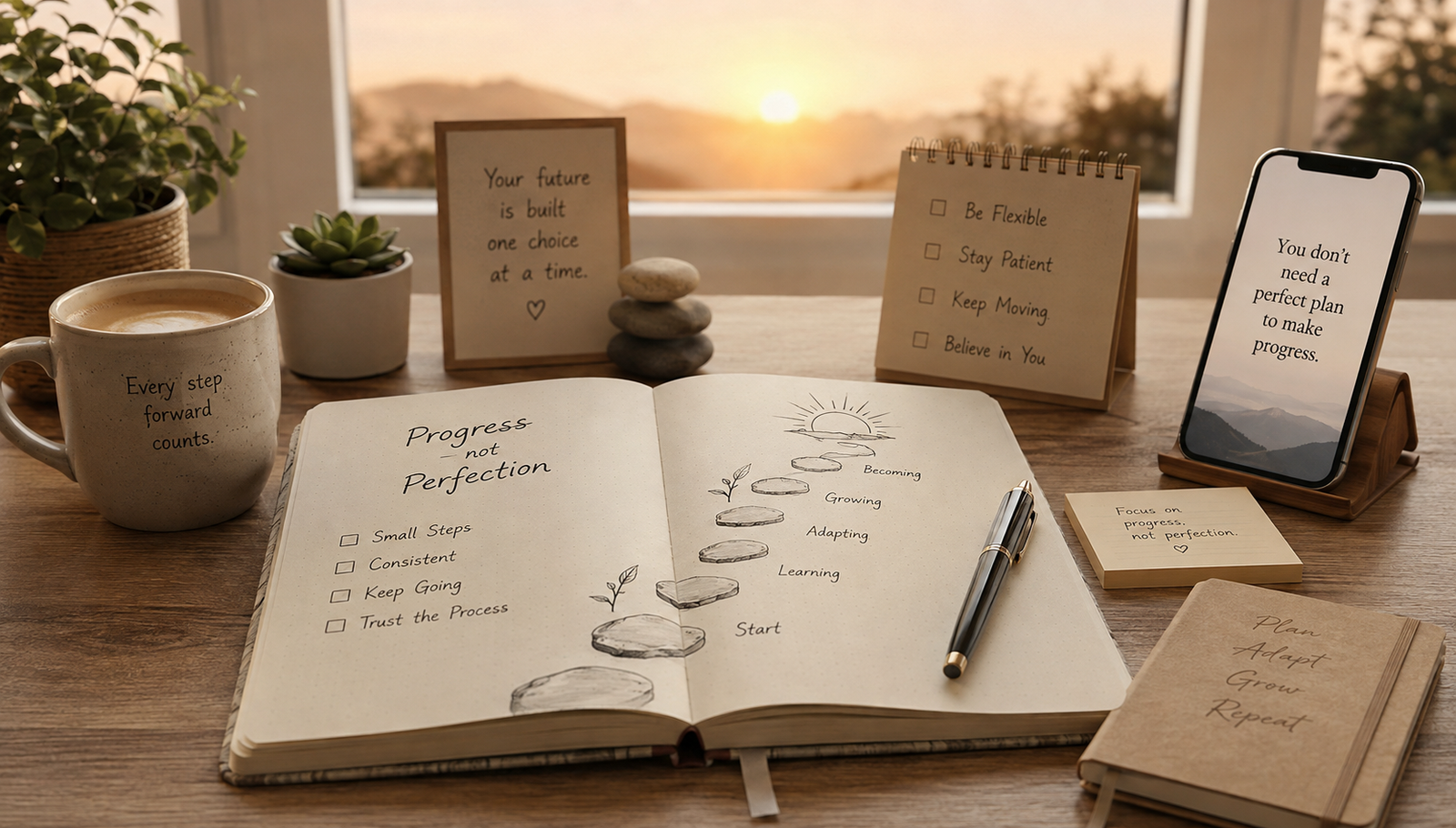

It usually begins with something small. You open social media for a few minutes and see someone celebrating a promotion, buying a home, travelling somewhere beautiful, getting married, building a business, or simply looking happier than you feel that day. Nothing has actually changed in your own life, yet suddenly your progress seems smaller.
Comparison has a strange way of turning perfectly good progress into something that feels inadequate. You may have been proud of yourself five minutes earlier, but after seeing someone else's achievement, you start wondering whether you are moving fast enough.
The problem is not noticing what other people are doing. We naturally observe the people around us. The problem begins when someone else's timeline becomes the measuring stick for our own life.
Learning to step away from constant comparison does not mean becoming less ambitious. In many cases, it does the opposite. When you stop spending so much energy measuring yourself against other people, you have more attention available for building a life that actually matters to you.
Why We Compare Ourselves So Easily
Comparison often happens automatically. We notice who seems more successful, confident, attractive, productive, financially secure, or socially connected. Sometimes comparison can even provide useful information. Seeing another person's progress might show us what is possible or encourage us to improve.
But unhealthy comparison feels different. Instead of inspiring action, it creates a feeling of being behind.
You might think, "They already have a successful career and I'm still figuring things out," or, "Everyone seems to be moving forward except me."
These thoughts rarely include the complete story. You are comparing everything you know about your own life—including mistakes, doubts, delays, responsibilities, and difficult days—with the small portion of another person's life that you can see.
Social Media Can Distort Your Sense of Progress
Social media makes comparison particularly easy because achievements are highly visible while ordinary struggles often remain private.
You see the graduation photograph, not every stressful night before the exam. You see the business announcement, not necessarily the years of uncertainty behind it. You see the holiday pictures, not the person's financial worries, family problems, insecurities, or normal frustrating days.
This does not mean people are being dishonest. Sharing happy moments is completely natural. The important thing is remembering that a collection of highlights is not the same as a complete life.
If certain accounts consistently leave you feeling inadequate, jealous, anxious, or discouraged, consider changing what you consume. Your feed does not need to become a daily scoreboard.
Your Timeline Is Allowed to Look Different
One of the most damaging beliefs behind comparison is the idea that life follows one correct schedule.
Finish education by this age. Build a career by that age. Earn a certain amount. Get married. Buy a home. Start a family. Reach another milestone.
Real life rarely follows such a neat sequence.
People begin careers late, change industries, return to education, rebuild finances, leave relationships, start businesses after years of ordinary jobs, discover new interests, and completely redefine what success means to them.
Maybe your journey is taking longer than you expected. That does not mean you are doing something wrong. Sometimes life simply takes a different route.
If you are rebuilding after a setback, you may also find our article on why starting again is a skill, not a failure useful. Sometimes progress begins when we stop judging ourselves for needing a different route.
Compare Yourself With a More Useful Person: Your Past Self
If you need comparison to measure progress, change the reference point.
Instead of measuring your progress against someone else's achievements, look back at your own life. Ask yourself, “What can I handle today that was difficult for me a year ago?”
Maybe you communicate more confidently. Perhaps you manage money more carefully. You may have learned to say no, become more disciplined, improved a skill, developed healthier routines, or recovered more quickly from disappointment.
These changes are easy to miss because they rarely arrive with applause.
Keeping a simple monthly note can help. Write down what you learned, what became easier, what you handled well, and what you want to improve next. Over time, you create evidence of your own development rather than depending on someone else's life to tell you whether you are progressing.
Separate Inspiration From Self-Criticism
Another person's success does not have to become evidence of your failure.
When someone has something you want, pause before criticizing yourself. Ask what exactly attracts you to their situation.
Perhaps you do not actually want their career—you want greater freedom. Maybe you do not want their lifestyle—you want financial security. Perhaps their confidence reminds you that you want to express yourself more openly.
This small distinction matters.
Jealousy and comparison sometimes contain useful information about what we value. Instead of allowing that feeling to become "I'm not good enough," turn it into a question: "What is this showing me about what I want?"
Now comparison becomes information rather than punishment.
Build Goals Around Your Values
It becomes much easier to feel behind when you have not clearly decided where you actually want to go.
If your goals are based mainly on what friends, relatives, coworkers, influencers, or society appear to value, someone will always seem ahead of you.
Try defining success personally.
Would success mean more income, or enough income with more free time? Do you want a prestigious job, or work that gives you independence? Do you want a larger social circle, or a few trustworthy relationships? Do you want constant achievement, or a calmer life with space for family and hobbies?
There is no universal answer.
Once your priorities become clearer, other people's achievements lose some of their power over you because you realize that you may not even be playing the same game.
Turn Encouraging Words Into Action
A meaningful quote can interrupt an unhelpful thought, especially when comparison begins pulling your attention away from your own path. But inspiration works best when it leads to something practical.
Sometimes a short reminder is enough to interrupt a negative thought. If you enjoy using quotes as daily reminders, you can also browse QuoteStudiofor motivational and life-related quotes.
When you find a quote that genuinely connects with you, do not only save it. “Pause for a moment and think about one small way you can put that message into practice in your own day.”
If a quote reminds you to be patient, perhaps your action is giving yourself another month to learn. If it encourages courage, your action might be sending an application you have been avoiding. If it speaks about consistency, your action could be working on your goal for twenty focused minutes.
Words become more valuable when they influence behavior.
Practice Self-Compassion When You Feel Behind
People often respond to comparison by becoming harsher with themselves. Unfortunately, criticism does not always create better performance. Sometimes it simply makes an already difficult moment heavier.
Self-compassion offers another approach: recognizing that struggling, failing, and feeling inadequate are human experiences while responding to yourself with greater kindness. Harvard Health describes self-compassion as something that can be learned rather than a quality you either naturally have or do not have.
For a deeper explanation, read the Harvard Health guide to self-compassion.
Being kinder to yourself does not mean pretending everything is perfect. You can acknowledge that you want more from your life while refusing to insult yourself for not being there yet.
Notice the Progress Nobody Posts About
Some of life's most important progress is difficult to photograph.
Learning to control your reactions. Leaving an unhealthy situation. Becoming more dependable. Managing stress better. Asking for help. Saving a little money every month. Setting boundaries. Becoming comfortable alone. Trying again after disappointment.
These achievements may never receive hundreds of likes, but they can completely change the quality of your life.
Resilience itself develops through adapting to challenges, and psychological resources associated with resilience can be practiced and strengthened. The American Psychological Association's resilience guide provides additional perspective on adapting to difficult experiences.
Create More Than You Consume
One practical way to reduce comparison is surprisingly simple: spend more time creating your life than watching other people display theirs.
Instead of another thirty minutes of scrolling, use that time to exercise, study, cook, call someone you care about, work on a personal project, learn something useful, organize your finances, or simply rest without a screen.
The more involved you become in your own life, the less interesting constant comparison becomes.
You do not need to disappear from social media. You simply need enough distance to remember that your real life deserves more attention than someone else's digital one.
Frequently Asked Questions
Is comparing yourself to others always unhealthy?
No. Comparison can sometimes provide inspiration, information, or a useful reference point. It becomes unhealthy when it repeatedly damages your confidence, creates anxiety, or makes you dismiss your own progress.
How can I stop comparing myself on social media?
Reduce unnecessary scrolling, unfollow or mute accounts that consistently trigger negative comparison, and follow content that teaches, inspires, or genuinely entertains you. Creating boundaries around screen time can also help.
What should I do when someone else's success makes me jealous?
Instead of judging the feeling, examine it. Ask what part of their success you actually want. The answer can reveal a goal, value, or change you would like to pursue in your own life.
How can quotes help with comparison?
Thoughtful quotes can provide a quick perspective shift and remind you of ideas such as patience, self-respect, consistency, and personal growth. They become most useful when you connect the message with a practical action.
How do I know whether I am making enough progress?
Measure progress against meaningful personal goals rather than someone else's timeline. Look at skills learned, habits improved, challenges handled, promises kept, and steps completed over weeks or months.
Final Thoughts
You will probably never eliminate comparison completely. There will always be someone earning more, achieving something earlier, travelling further, looking more confident, or reaching a milestone you still want.
The goal is not to stop noticing other people's lives. It is to stop using them as evidence that yours is inadequate.
Your life deserves to be measured by your values, circumstances, growth, and direction. Pay attention to where you were, where you are now, and what your next meaningful step could be.
Someone else's progress can inspire you without defining you. Someone else reaching a milestone before you does not mean you have missed yours. You may simply be working through a different set of circumstances and priorities. What matters is knowing what you want your next step to be and continuing to take it. Keep building a life that makes sense from the inside—not one that simply looks successful from the outside.